
The physician who put Malatya on the world map
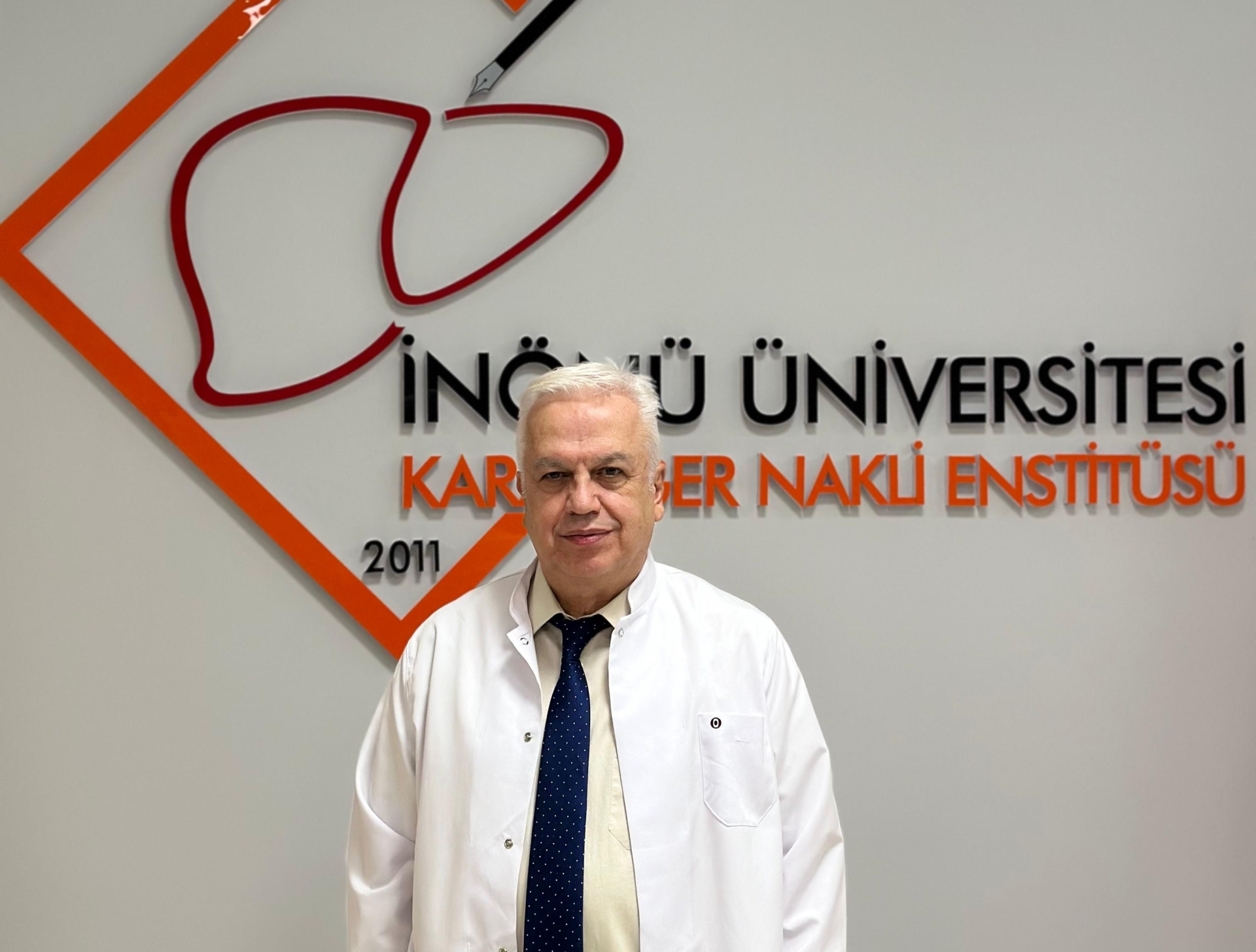
Imagine a hospital in Malatya that has reached the highest figures not only in Türkiye but also in Europe in living-donor liver transplantation. Moreover, by applying an algorithm developed at Boston College, this center has turned into a structure cited as an example to the world in cross transplantation. Prof. Dr. Sezai Yılmaz, head of İnönü University Liver Institute, says: "We are now at a level where we can perform a seven-way cross liver transplant at the same time; this is an orchestra job." We wanted to hear from the source the effort, operation and transformation behind a system woven with numbers.
Mr. Sezai, today in Malatya you perform nearly 300 liver transplants a year. We are talking about one of the busiest centers in Europe. How is this possible?
Actually this is not just a medical matter. It is a story of building. A journey that started from scratch, kneaded with shortcomings but never gave up. When I came from Ankara, nothing was ready. But we knew our goal: to establish Türkiye's best liver transplant center in Malatya.
Why not Ankara, Istanbul or abroad?
When I left the comfort of the metropolis and returned, everyone asked the same thing. But what mattered to me was building a structure, developing a model. If I had done it elsewhere, it might have been easier. But it would only have meaning if it were here, in my own hometown. And I chose that meaning.
So how did the development go?
The first days were quite hard. Equipment, staff, patient follow-up… But we did not give up. We built a team. We trained. We worked day and night. Over time this discipline turned into a system. Today, with a specialist team of 20–30 people, we are able to perform a seven-way cross liver transplant at the same time. There is no other center in the world that has achieved this.
How many liver transplants are performed at your center per year?
We perform about 300 liver transplants. Thanks to cross liver transplants, I think this number will reach 400. There is no other center in Türkiye or Europe that has reached this number. In the world, we are one of a handful of centers.
You said seven-way cross transplant at the same time; what does this mean?
That is, seven recipients and seven donors, fourteen people in total, enter surgery at the same time for cross liver transplants. Think of it as an orchestra. At that moment everyone on our team has a defined role, and the timing must be flawless. Otherwise this does not work.
You say cross transplant. Could you explain a little?
Cross transplantation is a very important method, especially in living-donor liver transplantation. Because there is a serious shortage of organ donation in Türkiye. Only 10–15% of the need can be met from deceased donors. Therefore the majority of patients have to be transplanted with a living donor. But not everyone's relative is in a position to give them a liver. Compatibility cannot be achieved.
What happens then?
This is where the system we call cross transplantation comes in. Say there is no compatibility between one patient and their donor. Likewise another patient and their donor are also incompatible. But when these two pairs are crossed, one's donor may be suitable for the other patient, and the other's donor for the first patient. Thus both patients get a chance at once. We call this a two-way cross. With this method the lives of many people can be saved.
Are these donors matched randomly?
No, it is based entirely on a scientific foundation. Two of our Turkish academics from Boston College, Prof. Tayfun Sönmez and Prof. Utku Ünver, developed an algorithm for this. Its name is the Banu Bedestenci Sönmez Cross Transplant Algorithm. Through our cooperation we began applying this model at our center and saw the results immediately. Thanks to the algorithm we have performed 279 cross liver transplants in the last three years. For us this was a serious medical leap.
Is 279 cross liver transplants in three years a lot?
Yes. This is a very serious figure. Let me put it this way: India, which performs the most cross liver transplants after us, has performed a total of only 259 cross liver transplants with 9 centers in 15 years. We did this in three years, only at our institute. We will soon pass 300.
You mentioned earlier I would like to return to the cooperation with Boston College. How did this scientific cooperation begin?
Actually through a very human bond. In 2019 we performed five simultaneous transplants. It was covered in the press. Then Professor Tayfun Sönmez came to Malatya. He said, "We can take this model even further with the algorithm we have developed." They donated this algorithm, which they designed together with Professor Utku Ünver, to our center. Thus, thanks to this scientific cooperation with Boston College, the system became applicable at our hospital.
The name of the algorithm is striking. Why "Banu Bedestenci Sönmez"?
The name of the algorithm is actually an expression of loyalty. Mrs. Banu Bedestenci Sönmez supported her husband Professor Tayfun's work with great devotion for years, but unfortunately succumbed to cancer in the USA. When using this algorithm, we know that we carry not only a scientific method but also a memory. Together with its name, the algorithm also carries a meaning that touches human life.
Where else is the algorithm used?
It is actually quite common in kidney transplants. But very few centers apply it so systematically in liver transplantation. In the USA, a national pilot program covering 15 centers was launched in January 2023. Eleven months later no cross liver transplant could be performed and the program was ended. We have been applying it systematically for three years.
As I understand it, the cross transplant system is quite complex. How is the sustainability of such an infrastructure ensured?
Liver transplants performed at state universities are financed by the state. This provides an important advantage in terms of both the continuity of the process and accessibility. Thus, especially the volume in living-donor transplants can be met. Processes related to patients from abroad are subject to a separate assessment.
So how do these worldwide successes resonate?
There is high interest in international circles. Our operations with the cross transplant model attract attention in the scientific community. The collaborations we have established with our colleagues abroad reinforce this interest even more. In Türkiye, we sometimes feel that these successes are not as visible as they should be. But our main motivation is to reach more patients, to be a cure, and to keep improving this model.
What has staying in Malatya added for you?
This city has given me not just a workplace but a responsibility. Going to big centers would have been easier, but we chose the hard path. With hardship we built a stronger team and a more resilient structure. The point we have reached today was possible not through the efforts of one physician alone, but through a city's faith and a team's determination.
SOURCE: https://www.fortuneturkey.com/malatyayi-dunya-haritasina-yerlestiren-hekim